
Assisted Living Facility Access Control Is About More Than the Front Door
Assisted living facilities have a unique security challenge.
They are homes for residents, workplaces for care teams, destinations for families, and operational environments for vendors, contractors, emergency responders, and administrators.
That means access control in assisted living facilities cannot be designed like access control for a standard office building. The goal is not simply to lock doors. The goal is to manage movement in a way that supports safety, dignity, daily care, and emergency response.
A practical access control plan should help answer questions such as:
When these questions are addressed door by door, access control becomes more than a security feature. It becomes part of the facility’s safety and operations plan.
Why Assisted Living Facility Access Control Is Getting More Attention in 2026
Recent events have placed assisted living safety, emergency planning, staffing, and oversight under greater public attention.
In January 2026, Massachusetts announced assisted-living safety reforms after a fatal assisted-living fire. The reforms included annual inspections, emergency plan reviews, quarterly staff exercises, annual evacuation drills, and improved public access to compliance records.
For assisted living operators, the takeaway is clear: safety planning is no longer just about having policies on paper. Facilities are being expected to show that their buildings, staff, procedures, and emergency response plans are regularly reviewed, tested, and documented.
Emergency preparedness is also receiving continued attention across long-term care. CMS emergency-preparedness information was updated in November 2025, and AHCA/NCAL noted in March 2026 that long-term care providers must review and update emergency-preparedness programs annually.
Access control plays a practical role in that larger readiness picture.
A door system cannot replace staff training, emergency planning, or life-safety procedures. But it can help facilities better understand who entered, which doors were opened, when restricted areas were accessed, whether service entrances were secured, and how staff responded to controlled exit events.
This matters in assisted living because residents may have different levels of independence, mobility, memory support needs, and emergency assistance requirements. Families want confidence that residents are protected. Staff need systems that reduce confusion instead of adding more steps. Facility leaders need records, policies, and technology that support accountability.
Access control cannot solve every operational challenge, but it can help create a more predictable environment. When paired with clear policies, staff training, visitor procedures, fire and life-safety planning, and video verification, it can support safer movement throughout the building.
Start With a Door-by-Door Access Control Review
A useful assisted living access control review begins by looking at every door type separately.
Not every door needs the same hardware, permission level, or monitoring rule. A main entrance, medication room, memory care exit, courtyard gate, staff entrance, and delivery door all serve different purposes.
The checklist below can help facility leaders identify where access control may reduce risk, improve workflow, or strengthen documentation.
Main Visitor Entrance
The main entrance is usually the most visible access point in an assisted living facility. It sets the tone for residents, families, visitors, and staff.
A good main entrance should feel welcoming, but it should also be structured.
Review questions:
Recommended approach:
Use access control with visitor verification, video intercom, and visitor management where appropriate. The entrance should support a friendly arrival experience while still documenting who is entering the facility.
Staff Entrance
Many assisted living facilities have staff doors away from the main lobby. These doors may be near parking areas, service corridors, kitchens, or rear entrances.
Staff entrances can become a weak point if they are propped open, shared with vendors, or managed with mechanical keys.
Review questions:
Recommended approach:
Use credential-based access for staff doors, with time-based permissions where appropriate. Avoid shared codes or uncontrolled keys when individual accountability is needed.
Memory Care and Controlled Exit Doors
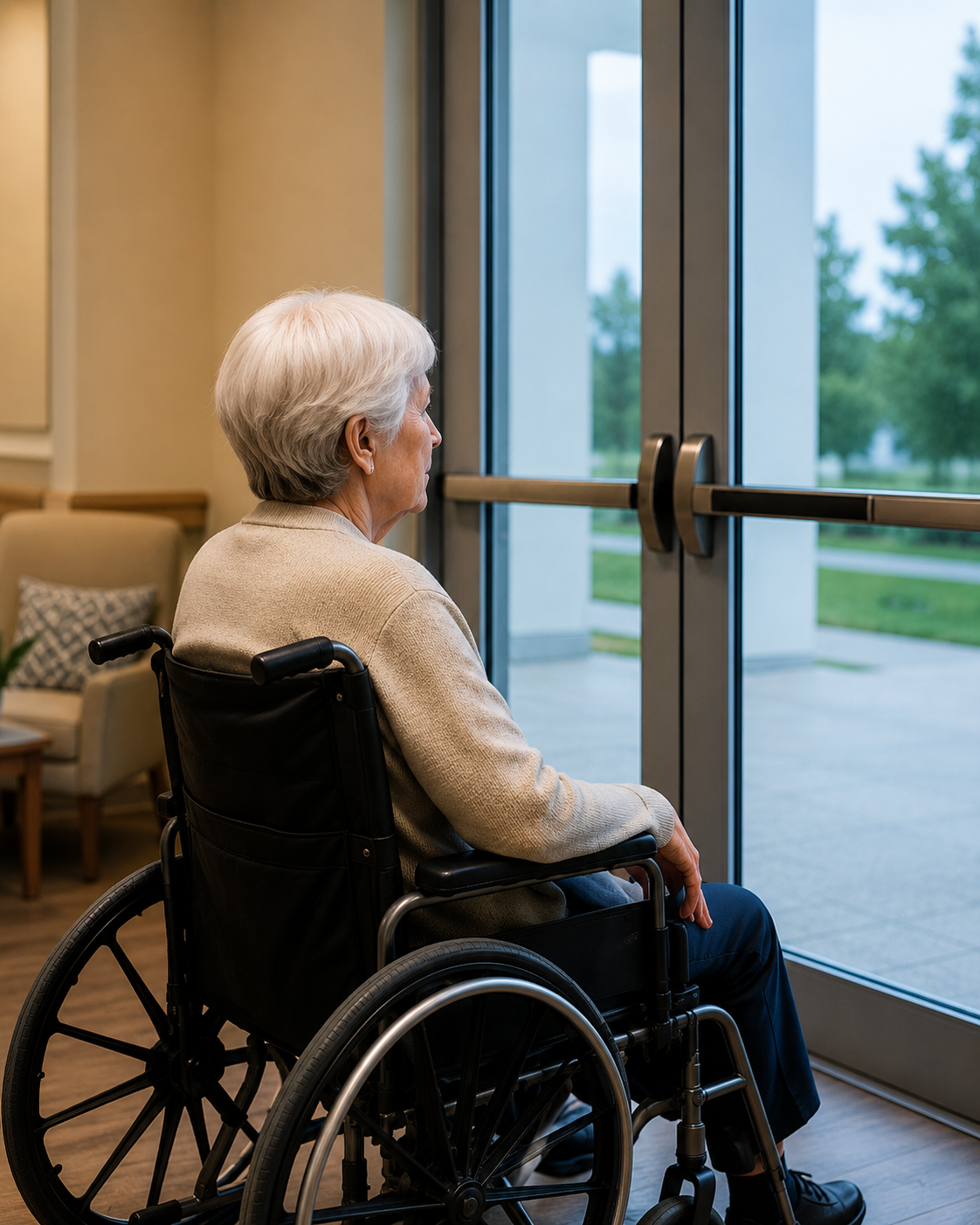
In assisted living and memory care environments, some residents may be at risk of unsafe exit-seeking or wandering.
This is one of the most sensitive areas of access control design. The system should support resident safety without creating an environment that feels punitive or institutional.
Review questions:
Recommended approach:
Use controlled exits only where appropriate and in compliance with applicable codes and care requirements. Door alerts, video verification, and staff response procedures should work together. The goal is not to restrict every resident, but to support safe movement based on real risk.
Medication Rooms
Medication rooms require strong access control because they contain sensitive and regulated items.
Mechanical keys can be difficult to track, especially when staff roles change or temporary staff are used.
Review questions:
Recommended approach:
Use role-based access control and detailed audit trails. Medication rooms should not rely on informal access habits or shared credentials.
Records, Administration, and IT Areas
Assisted living facilities may store resident records, staff records, billing information, network equipment, and operational documents in offices or server areas.
These spaces are often overlooked because they are not resident-facing.
Review questions:
Recommended approach:
Treat records and IT spaces as sensitive zones. Restrict access to authorized personnel and maintain clear logs.
Courtyards, Gardens, and Outdoor Resident Areas
Outdoor areas are important for quality of life. Residents should be able to enjoy fresh air, walking paths, gardens, and social spaces where safely possible.
However, courtyards and garden gates can create exit risks if they connect to parking lots, sidewalks, wooded areas, public roads, or service routes.
Review questions:
Recommended approach:
Design outdoor access with independence in mind. The best solution may not be simply locking a gate, but creating monitored, safe outdoor zones with clear alerts and staff visibility.
Service, Delivery, and Loading Doors
Delivery doors and service entrances are common sources of access-control problems.
They are often used by food service, laundry, maintenance, waste removal, pharmacy delivery, medical suppliers, and contractors. Because they support daily operations, staff may be tempted to leave them open.
Review questions:
Recommended approach:
Use scheduled access, temporary credentials, and door-held-open alerts. Service access should be convenient enough to use properly, but not so open that it bypasses the facility’s security plan.
Elevators and Stairwells
In multi-level assisted living facilities, elevators and stairwells may require additional planning.
Access control may be used to manage movement to certain floors, restrict back-of-house routes, or support emergency procedures.
Review questions:
Recommended approach:
Use elevator and stairwell controls carefully. The system should support safety and emergency movement, not create confusion during urgent events.
Contractor and Vendor Access
Assisted living facilities often rely on outside vendors for maintenance, medical equipment, food service, cleaning, technology, landscaping, and repairs.
A contractor who is trusted for one task should not automatically have broad access to resident areas or restricted spaces.
Review questions:
Recommended approach:
Use visitor management or temporary access credentials for vendors and contractors. Keep access specific, time-limited, and documented.
Emergency Access and Life Safety
Access control must never be planned in isolation from fire, building, accessibility, and emergency requirements.
A secure door must still behave correctly during emergencies.
This point has become especially important as assisted living safety reforms and emergency-preparedness expectations receive more public attention. Annual inspections, emergency plan reviews, staff exercises, evacuation drills, and public compliance transparency all point to the same issue: facilities need systems and procedures that can be tested, documented, and understood by staff.
Review questions:
Recommended approach:
Review access control with qualified security professionals, facility leadership, fire/life-safety stakeholders, and local code requirements. Emergency access should be tested, documented, and understood by staff.
The access control system should support the emergency plan, not complicate it. Staff should know what happens when alarms activate, when power fails, when a door is forced, when a controlled exit opens, or when emergency responders arrive.
Emergency Readiness Checklist
Why Integration Matters
Access control is more useful when it connects with other systems.
A door event alone may only tell staff that something happened. Integrated video, intercom, visitor management, and network monitoring can help staff understand what happened and respond faster.
For example:
If a controlled exit opens unexpectedly, staff can see the related camera view instead of responding blindly.
This type of integration helps reduce guesswork.
Technology Considerations for Assisted Living Facilities
A complete assisted living access control plan may include:
The right design depends on the building layout, resident needs, staffing model, visitor traffic, emergency procedures, and long-term support plan.
Product Roles Within an Integrated PMT Security Environment
PMT Security supports integrated environments that may combine access control, video management, intercom, visitor management, credentials, and network infrastructure.
In an assisted living facility, this may include:
OMNIA Access Control for managing doors, credentials, permissions, schedules, events, reports, and restricted areas.
Cathexis VMS for connecting access events with video verification and improving incident review.
Akuvox Smart Intercom for visitor communication, video entry, remote unlock, and controlled entrance workflows.
EVTrack Visitor Management for registration, QR credentials, contractor records, visitor logs, and emergency reporting.
Lysora cloud-managed networking for the routers, switches, wireless access points, wireless bridges, PoE infrastructure, monitoring, and diagnostics that support connected security systems.
The strongest system is not always the most complicated system. It is the system that matches the building, the residents, the staff, and the operational realities of the facility.
Assisted Living Facility Access Control Checklist
Use this checklist as a starting point for an internal review.
Common Mistakes to Avoid
Treating every door the same
A medication room, front entrance, staff door, courtyard gate, and resident exit should not all follow the same rules.
Relying on shared codes
Shared PINs and informal access methods reduce accountability. Individual credentials are easier to manage and audit.
Forgetting service entrances
Back doors, loading areas, and staff shortcuts can create risk if they are not included in the access control plan.
Adding technology without staff workflow
A system that staff cannot use consistently will not perform well. Access control should match real daily routines.
Ignoring the network
Modern access control, intercom, visitor management, and video systems depend on reliable connectivity. Network planning should be part of the security design.
Treating emergency release as an afterthought
Doors must support fire and emergency response requirements. Access control should be reviewed alongside life-safety planning.
Access control for assisted living facilities should protect people without making the building feel less like home.
The most effective approach is practical and door-specific. Start with the actual movement patterns in the building. Review each entrance, exit, staff area, restricted room, service door, courtyard, elevator, and emergency route.
Then design access control around real risks, real workflows, and real response procedures.
When done well, access control helps assisted living facilities support safer movement, clearer accountability, faster response, and greater confidence for residents, families, staff, and operators.
Share:
Frequently Asked Questions (FAQs)
Access control is the use of credentials, door hardware, software, permissions, schedules, and monitoring tools to manage who can enter, exit, or access specific areas of a facility.
Access control helps facilities manage visitors, staff access, restricted rooms, service entrances, controlled exits, and audit trails. It supports resident safety, staff workflow, and operational accountability.
Access control can help by monitoring controlled exits, triggering alerts, and helping staff respond quickly. It should be used alongside resident care planning, staff training, emergency procedures, and applicable life-safety requirements.
Start with the main entrance, staff entrances, controlled exits, medication rooms, records rooms, courtyard gates, service doors, and stairwell or elevator access points.
Video intercoms can help staff see and speak with visitors before granting access. They are useful for main entrances, secondary doors, delivery points, remote gates, and after-hours access.
Common restricted areas include medication rooms, records rooms, staff offices, kitchens, IT rooms, maintenance rooms, mechanical rooms, storage areas, and controlled resident-care areas.
Visitor management helps document who is in the building, when they arrived, who they are visiting, and whether they were approved. It can also support contractor tracking, QR credentials, and emergency reporting.
Modern access control systems often rely on IP-connected devices, intercoms, cameras, servers, switches, wireless access points, and remote management tools. If the network is unreliable, the security system may become harder to support.
No. Proper access control is about managing access safely and respectfully. It should support resident dignity, independence, privacy, and emergency egress while helping staff respond to risk.
Facilities should review access control regularly, especially after changes in residents, staffing, building layout, emergency procedures, visitor policies, or regulatory expectations.