
Why Wide Dynamic Range Matters in Security Cameras
Lighting conditions are rarely perfect in real-world security environments.
Entrances, lobbies, parking areas, and exterior perimeters often contain a mix of bright and dark areas. Without the right technology, this imbalance can make it difficult—or impossible—to clearly see what is happening.
This is where wide dynamic range (WDR) becomes essential.
WDR is not just a technical feature. It directly impacts how effectively a security camera captures usable, reliable footage.
What Is Wide Dynamic Range (WDR)?
Wide dynamic range is a camera capability that allows a single image to retain detail in both bright and dark areas at the same time.
Instead of prioritizing one lighting condition, WDR balances exposure so that:
- bright areas are not washed out
- dark areas remain visible
- subjects can be clearly identified
This is especially important in environments where lighting changes throughout the day or varies across a scene.
Where WDR Matters Most in Security Environments
Building Entrances
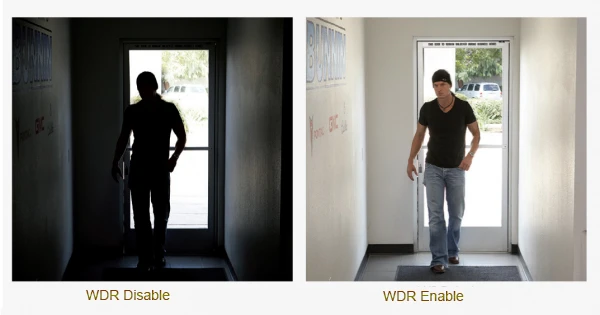
Entrances often have strong backlighting from outside.
Without WDR:
- individuals may appear as silhouettes
- facial details are lost
With WDR:
- both indoor and outdoor lighting are balanced
- faces and movement remain visible
Lobbies and Reception Areas
Indoor environments frequently combine natural and artificial light.
WDR helps maintain consistent visibility across:
- windows
- overhead lighting
- shaded areas
This improves both monitoring and incident review.
Parking Garages and Exterior Areas
Parking areas and garages often include shadows, headlights, and uneven lighting.
WDR ensures that:
- vehicles are visible
- license plates are clearer
- movement is easier to detect
Access Control Points
Cameras placed near doors and access points must capture accurate visual data.
WDR improves the ability to:
- verify identity
- match video to access events
- maintain situational awareness
This is especially important in integrated systems using platforms such as Cathexis Technologies.
The Risk of Not Using WDR
Without WDR, security footage may:
- lose detail in bright areas
- obscure subjects in shadows
- fail to capture usable evidence
In many cases, this results in footage that is technically recorded—but not useful.
For security teams, this reduces confidence in the system and limits the ability to respond effectively.
How WDR Supports Integrated Security Systems
Modern security systems are not just cameras. They are integrated platforms combining:
- video surveillance
- access control
- intercom systems (such as Akuvox)
- visitor management solutions
In these environments, video must align with system events.
WDR ensures that visual data is:
- consistent
- reliable
- usable across systems
When video quality is compromised, integration loses value.
Real-World Impact
Consider a secured entrance.
Without WDR:
- a person entering from bright daylight may appear unrecognizable
With WDR:
- facial details are preserved
- movement is clearly captured
- events can be verified accurately
This difference directly affects the usefulness of recorded footage.
When WDR Is Most Important
WDR should be prioritized in environments with:
- strong backlighting
- mixed indoor and outdoor lighting
- shadows and uneven illumination
- critical identification points
In these scenarios, WDR is not optional—it is essential.
Wide dynamic range is a critical feature in modern security cameras.
It ensures that cameras can adapt to real-world lighting conditions and provide clear, usable footage.
For organizations, this means:
- better visibility
- improved identification
- more reliable incident review
Security systems must perform in environments where lighting is unpredictable.
Wide dynamic range ensures that cameras capture meaningful, actionable footage—regardless of lighting conditions.
At PMT Security, we focus on deploying video solutions that perform in real-world conditions, where clarity and reliability are essential.
Share:
Frequently Asked Questions (FAQs)
WDR (wide dynamic range) balances bright and dark areas so cameras capture clear detail in high-contrast lighting.
It prevents overexposed and shadowed footage, ensuring faces and key details remain visible.
At entrances, lobbies, parking areas, and anywhere with mixed or backlighting.
Firmware should be reviewed regularly and updated as part of a planned maintenance schedule.