
What Is an Access Control System? A Complete Guide
Access control systems are one of the most important components of modern physical security. In simple terms, they determine who can enter a building, when they can enter, and which areas they are allowed to access.
You’ll find access control systems in many environments today—office buildings, schools, hospitals, manufacturing facilities, residential complexes, and large campuses. Anywhere that security and controlled entry matter, access control plays a role.
While traditional locks and keys still exist, most modern facilities now rely on electronic access control systems. These systems use credentials, electronic readers, controllers, and management software to verify identity and enforce security policies.
In this guide, we’ll explore what an access control system is, how it works, the technologies involved, and how these systems fit into the broader security infrastructure used by modern organizations.
What Is an Access Control System?
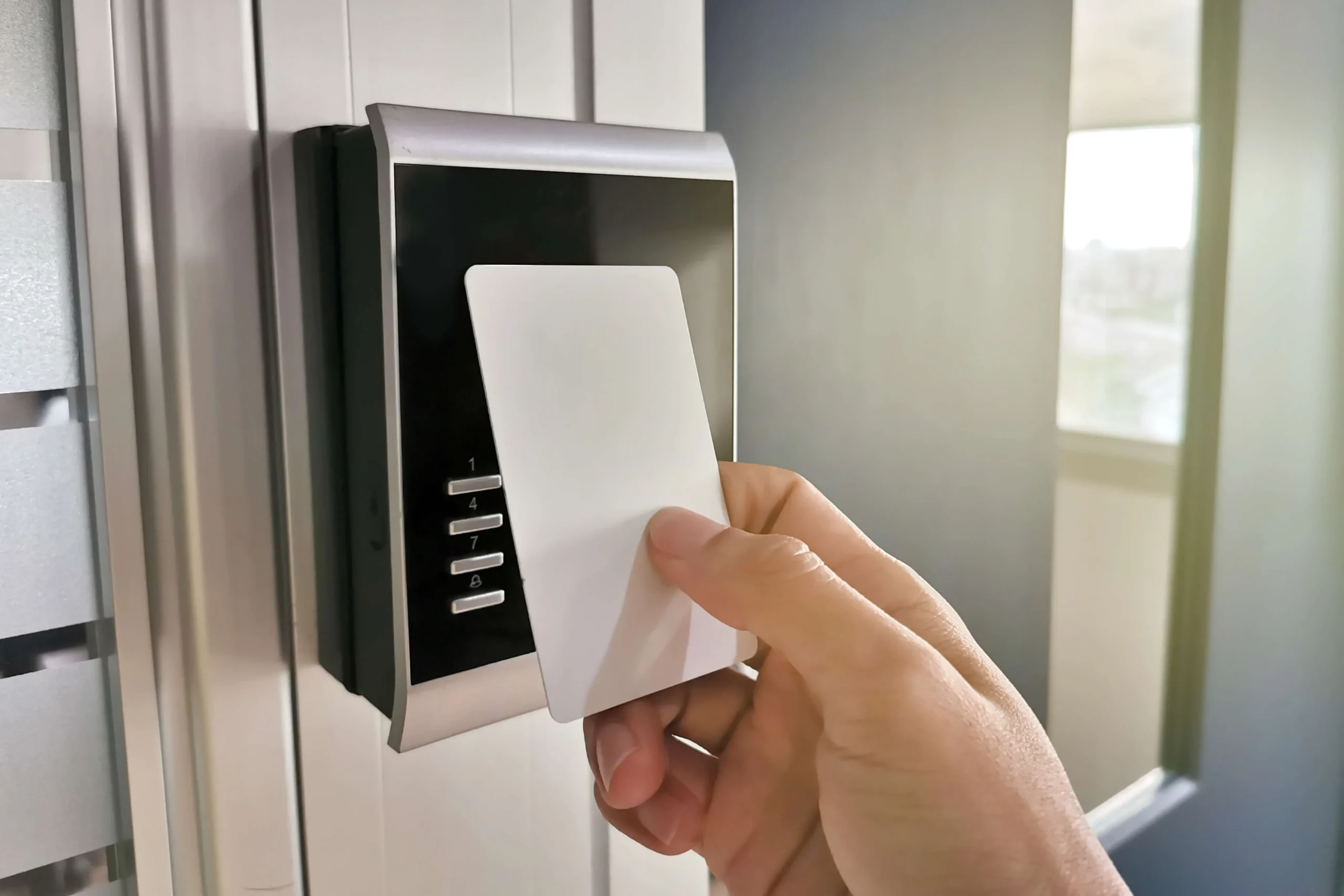
An access control system is a security technology that manages and restricts entry to buildings, rooms, or other secured areas. Instead of relying solely on mechanical keys, the system verifies a person’s identity electronically and determines whether they are authorized to enter.
At its core, access control answers three basic questions:
- Who is requesting access?
- Are they allowed to enter this location?
- Should access be granted at this time?
If the answer to these questions is yes, the system unlocks the door or gate. If not, access is denied.
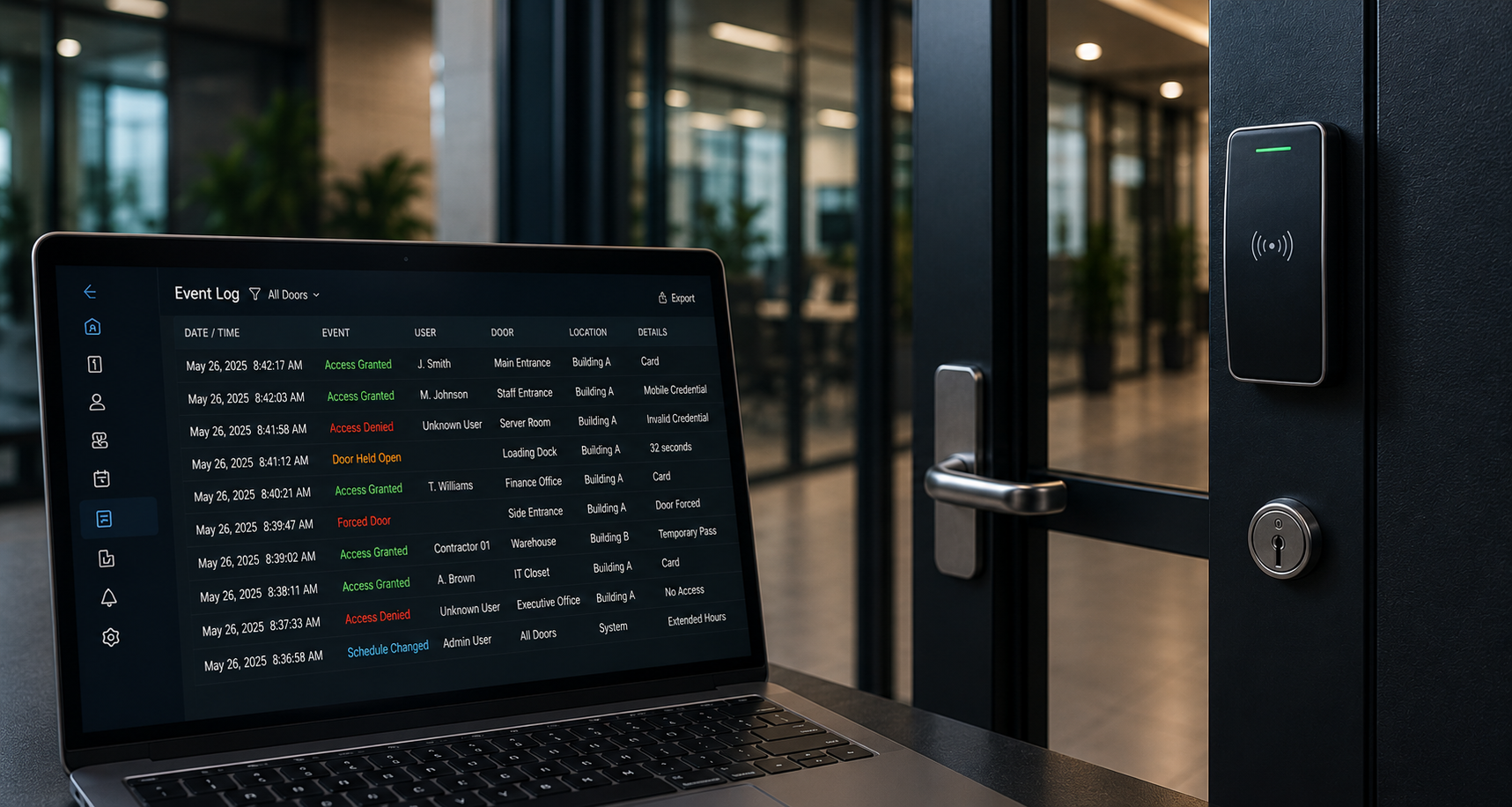
What makes modern access control systems particularly valuable is that they don’t just control entry—they also record and monitor access events, creating a digital audit trail of who entered specific areas and when.
For security teams and facility managers, this visibility can be extremely useful when investigating incidents, monitoring building activity, or enforcing security policies.
Why Access Control Systems Are Important
Security risks in modern facilities are rarely limited to theft or unauthorized entry. Organizations must also consider:
- employee safety
- protection of sensitive information
- regulatory compliance
- operational security
Access control helps organizations enforce policies that protect both people and infrastructure.
For example, a typical building might implement rules such as:
- employees can enter the main office during working hours
- IT staff can access server rooms
- contractors receive temporary access credentials
- visitors can only enter designated areas.
Without electronic access control, enforcing these rules consistently would require manual supervision or physical keys—which are difficult to manage at scale.
Electronic systems allow organizations to automate these decisions while maintaining centralized oversight.
How Access Control Systems Work
Although technologies vary, most access control systems follow the same basic process.
1. Identification
The user first presents a credential to identify themselves.
Common examples include:
- key cards
- RFID fobs
- smartphone credentials
- PIN codes
- biometric identifiers.
The credential essentially tells the system who is requesting access.
2. Authentication
Once a credential is presented, the system verifies that it is valid.
For example, the system checks whether:
- the card exists in the database
- the mobile credential is legitimate
- the biometric template matches the enrolled user.
At this stage, the system confirms the identity of the person requesting entry.
3. Authorization
After identity is confirmed, the system checks the user’s permissions.
Access permissions may depend on several factors, including:
- the specific door or location
- the user’s role
- time-of-day schedules
- security policies.
In other words, someone might be authorized to access one area but not another.
4. Access Decision
If the credential is valid and the permissions match the security rules, the controller sends a signal to unlock the door.
If the request fails any step—invalid credential, incorrect schedule, or restricted area—the system denies access.
This process happens in seconds, often without the user even noticing the underlying technology
Core Components of an Access Control System
Behind the scenes, several pieces of hardware and software work together to make access control possible.
Credentials
Credentials identify the user requesting access.
Common credential types include:
- RFID cards or badges
- key fobs
- PIN codes
- smartphone-based mobile credentials
- biometric identifiers.
Mobile credentials have become increasingly popular because they allow a smartphone to act as a secure digital key.
Biometric systems add another layer of security by verifying who a person is, rather than just what credential they possess.
Readers
Readers are the devices installed near entry points that detect credentials.
Examples include:
- card readers
- mobile credential readers
- keypad readers
- fingerprint scanners
- facial recognition terminals.
When a credential is presented, the reader sends the information to the system controller for verification.
Controllers
Controllers act as the decision-making engine of the system.
When the reader sends credential data, the controller checks it against the access control database.
If the system determines that the user has permission to enter, the controller signals the door hardware to unlock.
Controllers are typically connected to a network and managed through centralized software.
Door Hardware
Access control systems interact with several physical components installed at the door.
These may include:
- electric strikes
- magnetic locks
- door sensors
- request-to-exit devices.
Door sensors help detect events such as:
- doors forced open
- doors held open too long.
These alerts allow security teams to respond quickly when unusual activity occurs.
Management Software
Access control software serves as the central interface for managing the entire system.
Through this platform, administrators can:
- add or remove users
- issue credentials
- define access schedules
- monitor door activity
- generate reports.
In large organizations, the management platform may control hundreds or even thousands of doors across multiple buildings.
Types of Access Control Credentials
Different facilities use different credential technologies depending on their security needs.
RFID Cards and Key Fobs
These remain the most common access credentials.
Users present a card or fob near a reader, and the system verifies the stored identifier.
They are widely used because they are:
- inexpensive
- easy to issue
- quick to use.
PIN Codes
Some systems use keypad readers where users enter a numeric code.
PIN codes can be useful in situations where physical credentials are not practical, though they may be shared or forgotten.
Mobile Credentials
Mobile credentials allow a smartphone to function as an access credential.
Using technologies such as Bluetooth or NFC, users can unlock doors using a secure mobile app.
For many organizations, mobile credentials reduce the need to issue and manage physical cards.
Biometric Authentication
Biometric systems verify identity using unique physical characteristics.
Examples include:
- fingerprints
- facial recognition
- iris scanning.
Because biometric identifiers cannot easily be shared or copied, these systems provide a higher level of identity assurance.
Access Control System Architectures
Access control systems can be deployed in different ways depending on the size and complexity of the facility.
Standalone Systems
Standalone systems operate independently at individual doors.
They are typically used in smaller environments where centralized management is not required.
Networked Systems
Networked access control systems connect multiple doors and controllers to a central management server.
This allows administrators to manage permissions and monitor activity across the entire facility from one interface.
Cloud-Based Access Control
Cloud-based access control systems host management software remotely.
This allows administrators to manage systems from anywhere while simplifying system updates and multi-site deployments..
Integration With Other Security Systems
Modern access control systems rarely operate in isolation. Instead, they are often integrated with other security technologies.
Video Surveillance Integration
Access events can trigger camera recordings, allowing security teams to visually confirm who entered a specific door.
For example, a badge swipe can automatically display associated camera footage.
Visitor Management Systems
Visitor management platforms can issue temporary credentials for guests, contractors, and vendors.
These systems help organizations track visitor activity while maintaining controlled access.
License Plate Recognition
Parking facilities and vehicle gates may integrate license plate recognition systems to automatically authorize registered vehicles.
Building Automation Systems
Access control can also interact with building infrastructure such as elevators, lighting, and HVAC systems.
For example, presenting a credential at the entrance may enable elevator access to authorized floors.
Access Control Policies and Security Models
Access permissions are typically managed using structured policy models.
Role-Based Access Control
Access is determined by a person’s role within an organization.
For example:
- security staff may access all areas
- employees access workspaces
- visitors have limited entry.
Rule-Based Access Control
Rules such as time schedules determine when access is allowed.
For example, an employee may only access certain areas during business hours.
Attribute-Based Access Control
More advanced systems evaluate multiple factors such as user identity, location, or device type before granting access.
Benefits of Modern Access Control Systems
Organizations adopt access control systems for several practical reasons.
Improved Security
Access control prevents unauthorized individuals from entering restricted areas.
Centralized Management
Administrators can manage user permissions across many locations from one system.
Flexible Access Policies
Permissions can be adjusted quickly when employees change roles or security requirements evolve.
Event Logging and Accountability
Detailed access logs provide valuable information for audits and investigations.
System Integration
Access control systems can work alongside surveillance, visitor management, and other security technologies.
The Evolution of Access Control Technology
Access control has come a long way from mechanical locks and physical keys.
Modern systems now incorporate technologies such as:
- encrypted credentials
- mobile authentication
- biometric verification
- cloud-based management
- integrated security platforms.
As facilities become more connected and security requirements continue to grow, access control systems remain a critical foundation for protecting physical environments.
Access control systems play a central role in modern physical security. By verifying identity, enforcing access policies, and monitoring entry events, these systems allow organizations to manage security efficiently and consistently.
Whether deployed in a small office or across a large multi-site enterprise, access control systems provide the structure needed to protect people, facilities, and sensitive assets while supporting day-to-day operations.

Share:
Frequently Asked Questions (FAQs)
An access control system protects buildings and restricted areas by allowing only authorized individuals to enter. It helps organizations manage security, monitor entry events, and prevent unauthorized access.
Typical components include credentials, readers, controllers, door hardware, and management software that administers permissions and records access events.
Common credentials include RFID cards, key fobs, PIN codes, mobile credentials on smartphones, and biometric identifiers such as fingerprints or facial recognition.
Common credentials include RFID cards, key fobs, PIN codes, mobile credentials on smartphones, and biometric identifiers such as fingerprints or facial recognition.
Access control systems can integrate with video surveillance, visitor management platforms, license plate recognition systems, and building automation systems to improve situational awareness and security operations.
Traditional locks rely on physical keys, while access control systems use electronic credentials and centralized management software to regulate and monitor entry.
An access control system is a security technology that regulates who can enter a building, room, or restricted area by verifying identity and granting access only to authorized individuals. These systems typically use credentials such as key cards, mobile devices, or biometric identifiers, along with electronic readers, controllers, and management software to enforce security policies and monitor access events.
Access Control Audit Trails: What They Reveal
Access control audit trails do more than record door activity. They help organizations understand who entered, when access was attempted, which doors need review, and where security workflows may need improvement.
What Are the Risks of Outdated Access Control Systems?
Outdated access control systems may still function—but they can introduce serious security risks. From cloned credentials to weak authentication and lack of system visibility, legacy platforms can expose both physical and digital vulnerabilities. Learn why modernizing access control is critical for protecting people, systems, and data.

Access Control Security: Protecting Systems, Data & Buildings

Modular Access Control System Explained
A modular access control system changes how security is built. Learn how OMNIA’s controller, reader, and IO modules scale from one door to thousands.

OMNIA Access Control Software: Managing Security in Modern Facilities
A look at how OMNIA Access Control software helps organizations manage doors, credentials, and security workflows across modern facilities..

Contact Us
PMT Security Inc. is here to help, contact us directly by phone,