Access Control Isn’t Just for Doors — It’s for Data, Systems, and Risk
For years, access control has been viewed as a physical security tool—something that unlocks doors, restricts entry, and protects buildings.
That view is incomplete.
Modern access control systems don’t just control who enters a space. They control who accesses information, systems, and operational infrastructure.
And that changes everything.
The Shift: From Doors to Data
At its core, access control is about one thing:
Ensuring only authorized individuals can access specific resources—no more, no less.
Traditionally, that meant:
- Doors
- Gates
- Secure zones
Today, it also includes:
- Credential databases
- Employee identity records
- Visitor logs
- System permissions
- Video and audit data
- Integrated platforms (VMS, intercom, visitor management)
Access control has quietly evolved into part of your information security architecture.
Why This Matters: The Hidden Risk Layer
Every time someone uses an access card, mobile credential, or visitor QR code, data is generated and transmitted through:
- Readers
- Controllers
- Servers
- Software platforms
- Network infrastructure
That data includes identity, permissions, and access patterns.
If the system behind it isn’t secured, attackers don’t need to break a door—they can:
- Modify permissions
- Clone credentials
- Disable alarms
- Extract sensitive organizational data
This is where physical security becomes a cybersecurity concern.
Access Control as an Information Security System
Modern access control systems now follow the same principles used in IT security:
- Authentication — Who are you?
- Authorization — What can you access?
- Audit — What did you do?
This transforms access control into an identity and data management system, not just a hardware deployment.
Where Physical and Digital Security Converge
Platforms such as:
- Access control systems
- Video management systems
- Intercom systems
- Visitor management platforms like EVTrack
…are increasingly integrated.
This creates powerful capabilities:
- Unified identity across systems
- Real-time event correlation (door + video + visitor)
- Centralized audit trails
- Automated access provisioning
But integration also introduces a larger attack surface.
More systems connected together means more data flowing—and more responsibility to secure it..
Visitor Management Is Now a Data Security Function
Visitor management is one of the clearest examples of how access control has expanded beyond doors.
A simple visitor check-in now includes:
- Personal identity information
- Visit purpose and host details
- Time-based access permissions
- Digital credentials such as QR codes
This is structured, stored, and searchable data—not just a sign-in sheet.
How EVTrack Helps Protect That Data
Platforms like EVTrack are designed to ensure visitor data is not only captured—but controlled, secured, and traceable.
Secure data handling
- Structured data capture with defined inputs
- Secure storage of visitor records
- Time-bound credentials that automatically expire
Controlled access and identity validation
- Pre-registration and host approval workflows
- Digital credentials tied to specific visits
- Integration with access control systems to enforce permissions
Full audit trail and accountability
- Entry and exit timestamps
- Visitor-to-host relationships
- Detailed access history
This allows organizations to quickly answer critical questions during an incident:
- Who was on-site?
- Where did they go?
- When did they arrive and leave?
Reduced human error
- Eliminates handwritten logs
- Standardizes front desk processes
- Automates approvals and notifications
Privacy and compliance support
- Role-based access to visitor data
- Controlled data retention
- Consistent, auditable workflows
Visitor management is no longer just about convenience—it’s about protecting sensitive information tied to physical presence.
The Most Overlooked Vulnerability: The Platform Itself
Many organizations secure:
- Doors
- Locks
- Cameras
But overlook:
- Default passwords
- Administrator access
- System permissions
- Software vulnerabilities
This is where risk accumulates.
If an attacker gains access to the platform, they don’t need to force entry—they can simply grant it.
Best Practices: Securing Access Control as a System
To properly secure modern access control, organizations should treat it like any critical IT system.
1. Secure Identities and Credentials
- Enforce strong passwords
- Use multi-factor authentication
- Avoid shared accounts
2. Apply Role-Based Access Control
- Limit administrator privileges
- Assign access based on job function
- Regularly review permissions
3. Monitor and Audit Activity
- Track system changes and user actions
- Enable alerts for unusual behavior
- Maintain audit logs
4. Protect the Infrastructure
- Segment security systems from corporate networks
- Encrypt communication between devices
- Secure controllers and endpoints
5. Keep Systems Updated
- Validate integrations
- Apply firmware and software updates
- Replace outdated components
The Bigger Picture: Access Control as a Security Backbone
Access control is no longer a standalone system.
It is:
- A data collection platform
- A decision engine
- A compliance tool
- A cybersecurity control layer
When properly secured, it enables:
- Better visibility
- Faster response times
- Stronger compliance
- Reduced operational risk
When ignored, it becomes a silent vulnerability.
The original belief still exists:
Access control protects buildings.
But today’s reality is much broader:
Access control protects identities, systems, and information.
And systems like EVTrack reinforce that shift—ensuring that every interaction, whether employee or visitor, is not only managed… but protected.

Share:
Frequently Asked Questions (FAQs)
Access control is a system that manages who can enter physical spaces and access digital systems. It uses credentials, permissions, and policies to ensure only authorized individuals can access specific areas or information.
No. Modern access control systems also protect digital infrastructure, including user data, system permissions, and integrated security platforms like video and visitor management systems.
Access control platforms store sensitive data such as identities, credentials, and access logs. If not secured, attackers can manipulate permissions, clone credentials, or gain unauthorized access without physically entering a building.
Common risks include default passwords, excessive administrator privileges, lack of monitoring, outdated firmware, and unsecured integrations between systems.
Best practices include using strong passwords, enabling multi-factor authentication, limiting admin access, monitoring system activity, encrypting communications, and keeping software up to date.
Authentication verifies a user’s identity (who they are), while authorization determines what they are allowed to access within the system.
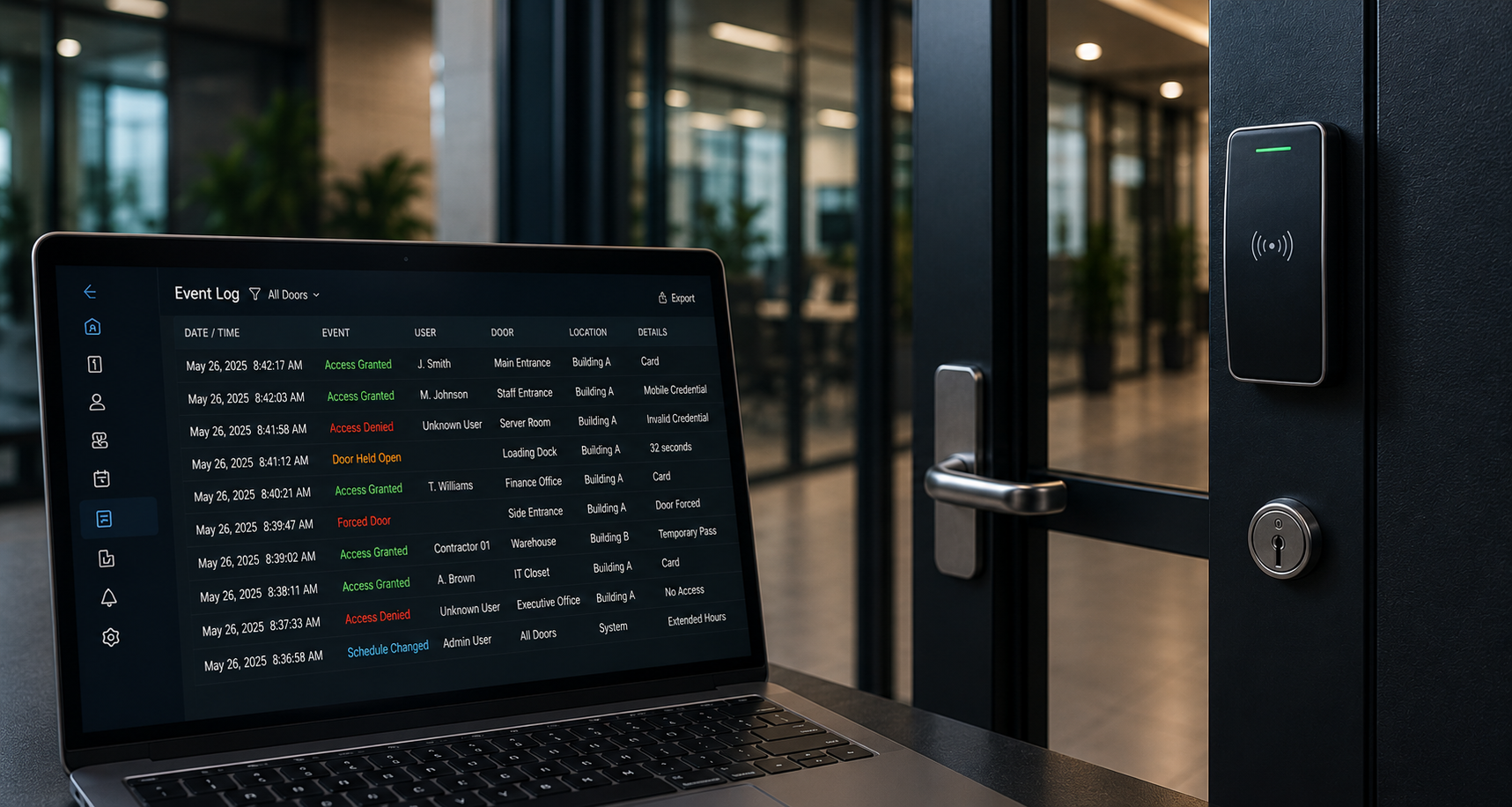
Access Control Audit Trails: What They Reveal
Access control audit trails do more than record door activity. They help organizations understand who entered, when access was attempted, which doors need review, and where security workflows may need improvement.
What Are the Risks of Outdated Access Control Systems?
Outdated access control systems may still function—but they can introduce serious security risks. From cloned credentials to weak authentication and lack of system visibility, legacy platforms can expose both physical and digital vulnerabilities. Learn why modernizing access control is critical for protecting people, systems, and data.

Modular Access Control System Explained
A modular access control system changes how security is built. Learn how OMNIA’s controller, reader, and IO modules scale from one door to thousands.

What Is an Access Control System? A Complete Guide
Access control systems regulate who can enter buildings and restricted areas using credentials, readers, and management software. This guide explains how modern access control technology works and how it integrates with physical security systems.
OMNIA Access Control Software: Managing Security in Modern Facilities
A look at how OMNIA Access Control software helps organizations manage doors, credentials, and security workflows across modern facilities..

Contact Us
PMT Security Inc. is here to help, contact us directly by phone,