What Are the Risks of Outdated Access Control Systems?
Access control systems are often installed with the expectation that they will “just work” for years.
And physically, many of them do.
Doors still unlock. Cards still read. Users still get in.
But beneath the surface, outdated access control systems can introduce serious security, operational, and compliance risks—especially as modern threats increasingly target connected infrastructure.
One of the biggest misconceptions in physical security is that a system is secure as long as it is operational.
In reality, many legacy access control systems:
- Continue functioning at the hardware level
- But lack modern security protections
- And are no longer supported with updates or patches
This creates a dangerous situation where systems appear reliable, while quietly becoming vulnerable.
Organizations like the Canadian Centre for Cyber Security emphasize that unpatched systems are one of the most common entry points for attacks across all types of infrastructure—including physical security platforms.
Legacy Credentials: Easy to Clone, Hard to Detect
Older access control deployments often rely on low-frequency proximity cards.
These credentials were never designed to withstand modern attack methods.
Today, widely available tools can:
- Read card data wirelessly
- Duplicate credentials in seconds
- Create unauthorized copies without physical access
Without encryption or secure protocols, the system cannot distinguish between a legitimate user and a cloned credential.
Modern standards such as OSDP (Open Supervised Device Protocol) and encrypted smart credentials were introduced specifically to address these weaknesses—but many legacy systems do not support them.
Lack of Visibility and Audit Capability
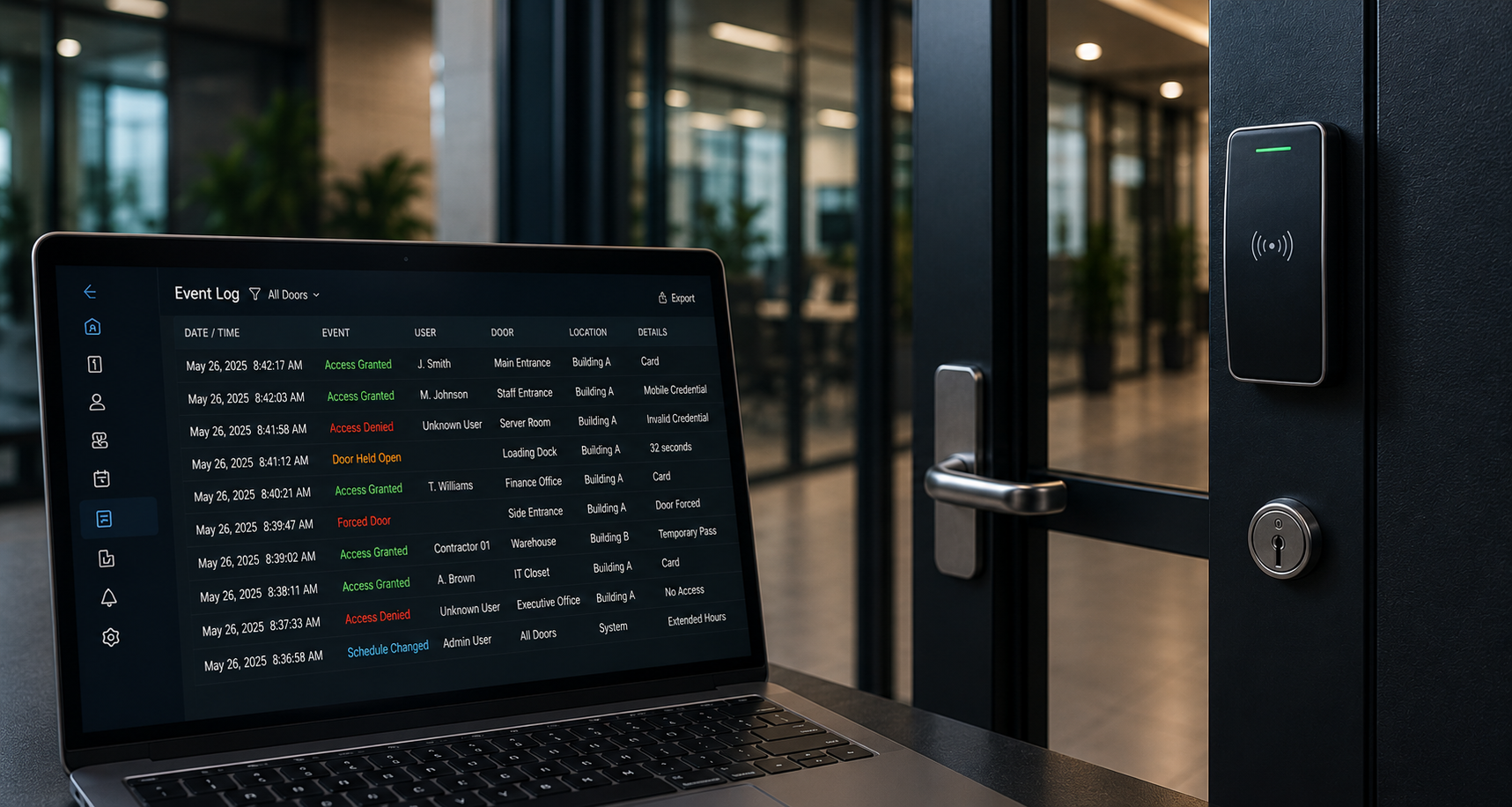
Outdated systems often lack the ability to provide meaningful insight into system activity.
This includes limitations such as:
- Minimal or incomplete audit logs
- No real-time monitoring or alerting
- Limited reporting capabilities
From a security perspective, this creates a critical gap.
If an incident occurs, organizations may not be able to answer basic questions:
- Who accessed the system?
- What changes were made?
- When did the activity occur?
Without proper logging and monitoring, detection and response become reactive instead of proactive.
Weak Authentication and Access Controls
Modern cybersecurity practices emphasize least privilege access and strong identity controls.
Legacy access control systems often fall short in this area.
They may rely on:
- Shared administrator accounts
- Default or weak passwords
- No multi-factor authentication (MFA)
- Limited role-based access control (RBAC)
This increases the risk of internal misuse or external compromise.
If a single administrative account is exposed, it can provide full control over the system—including unlocking doors, modifying permissions, or disabling security features.
Insecure Communication Between Devices
Older access control systems frequently use unsecured communication protocols between components such as:
- Card readers
- Controllers
- Servers
Without encryption, this data can be intercepted or manipulated.
In some cases, attackers can:
- Capture credential data in transit
- Replay commands to unlock doors
- Disrupt communication between devices
Modern systems address this with encrypted communication and secure protocols, but outdated infrastructure often cannot support these protections.
Integration Limitations Create Security Silos
Today’s security environments depend on integration.
Access control systems are expected to work alongside:
- Video surveillance platforms
- Intercom systems
- Visitor management solutions like EVTrack
Outdated systems struggle to integrate effectively, resulting in siloed environments.
This means:
- Events cannot be correlated across systems
- Security teams lack full situational awareness
- Response times are slower and less informed
For example, without integration between access control and visitor management, organizations may not have a complete record of who was on-site during an incident.
Compliance and Data Protection Risks
Access control systems increasingly handle sensitive data, including:
- Employee identity information
- Access permissions
- Visitor records
- Entry and activity logs
Outdated systems may not support modern data protection requirements such as:
- Secure data storage
- Controlled access to records
- Audit-ready reporting
- Data retention policies
This creates potential exposure under privacy regulations and internal governance requirements.
Increased Maintenance and Downtime
As systems age, they become harder to maintain.
Common challenges include:
- Unsupported hardware
- Limited availability of replacement parts
- Compatibility issues with newer software or operating systems
This leads to increased downtime, higher service costs, and reduced reliability over time.
The Real Risk: A False Sense of Security
Perhaps the most significant risk is not technical—it’s psychological.
Outdated access control systems often continue to “work,” giving organizations confidence that security is in place.
But without modern protections, these systems can become:
- Weak links in an otherwise secure environment
- Easy targets for credential attacks
- Blind spots in monitoring and reporting
When Should You Consider an Upgrade?
Organizations should evaluate their access control systems if they experience:
- Lack of software or firmware updates
- Use of legacy proximity cards
- Limited reporting or audit capabilities
- No support for encryption or modern protocols
- Difficulty integrating with newer security systems
Upgrading is not just about adding features—it’s about reducing risk and aligning with current security standards.
Access control is no longer just about controlling doors.
It is part of a broader system that manages identity, data, and security operations.
An outdated system doesn’t just fall behind—it creates exposure.
And in today’s environment, that exposure can extend far beyond the physical perimeter.

Share:
Frequently Asked Questions (FAQs)
If your system no longer receives firmware updates, uses legacy proximity cards, lacks encryption, or cannot integrate with modern platforms, it is likely outdated and should be evaluated.
Yes. Older systems often lack encryption, secure communication protocols, and strong authentication controls, making them vulnerable to credential cloning, interception, and unauthorized access.
The biggest risk is a false sense of security. Systems may appear to function normally while lacking modern protections, leaving organizations exposed to undetected threats.
Many legacy cards use low-frequency technology without encryption, making them easy to copy using inexpensive, widely available tools.
Yes. Older systems may not support proper data handling, audit logging, or reporting capabilities required for modern privacy and security standards.
Upgrading improves security, visibility, and system integration while reducing long-term maintenance costs and operational risk.
Access Control Audit Trails: What They Reveal
Access control audit trails do more than record door activity. They help organizations understand who entered, when access was attempted, which doors need review, and where security workflows may need improvement.
Access Control Security: Protecting Systems, Data & Buildings

Modular Access Control System Explained
A modular access control system changes how security is built. Learn how OMNIA’s controller, reader, and IO modules scale from one door to thousands.

What Is an Access Control System? A Complete Guide
Access control systems regulate who can enter buildings and restricted areas using credentials, readers, and management software. This guide explains how modern access control technology works and how it integrates with physical security systems.
OMNIA Access Control Software: Managing Security in Modern Facilities
A look at how OMNIA Access Control software helps organizations manage doors, credentials, and security workflows across modern facilities..

Contact Us
PMT Security Inc. is here to help, contact us directly by phone,