Access Control in Long-Term Care: Balancing Safety and Freedom
In long-term care (LTC) environments, safety is not just about keeping people out—it’s about protecting those inside without limiting their dignity, independence, and quality of life.
This creates a unique challenge:
How do you secure a facility while still allowing residents to feel at home?
Modern access control systems in long-term care are designed to strike that balance. When implemented properly, they do more than lock doors—they create controlled, flexible environments that support both safety and autonomy.
The Reality of Safety in Long-Term Care
Residents in LTC settings often include individuals with:
- Cognitive conditions such as dementia
- Mobility limitations
- Increased vulnerability to accidents or wandering
At the same time, facilities must manage:
- Multiple entry points
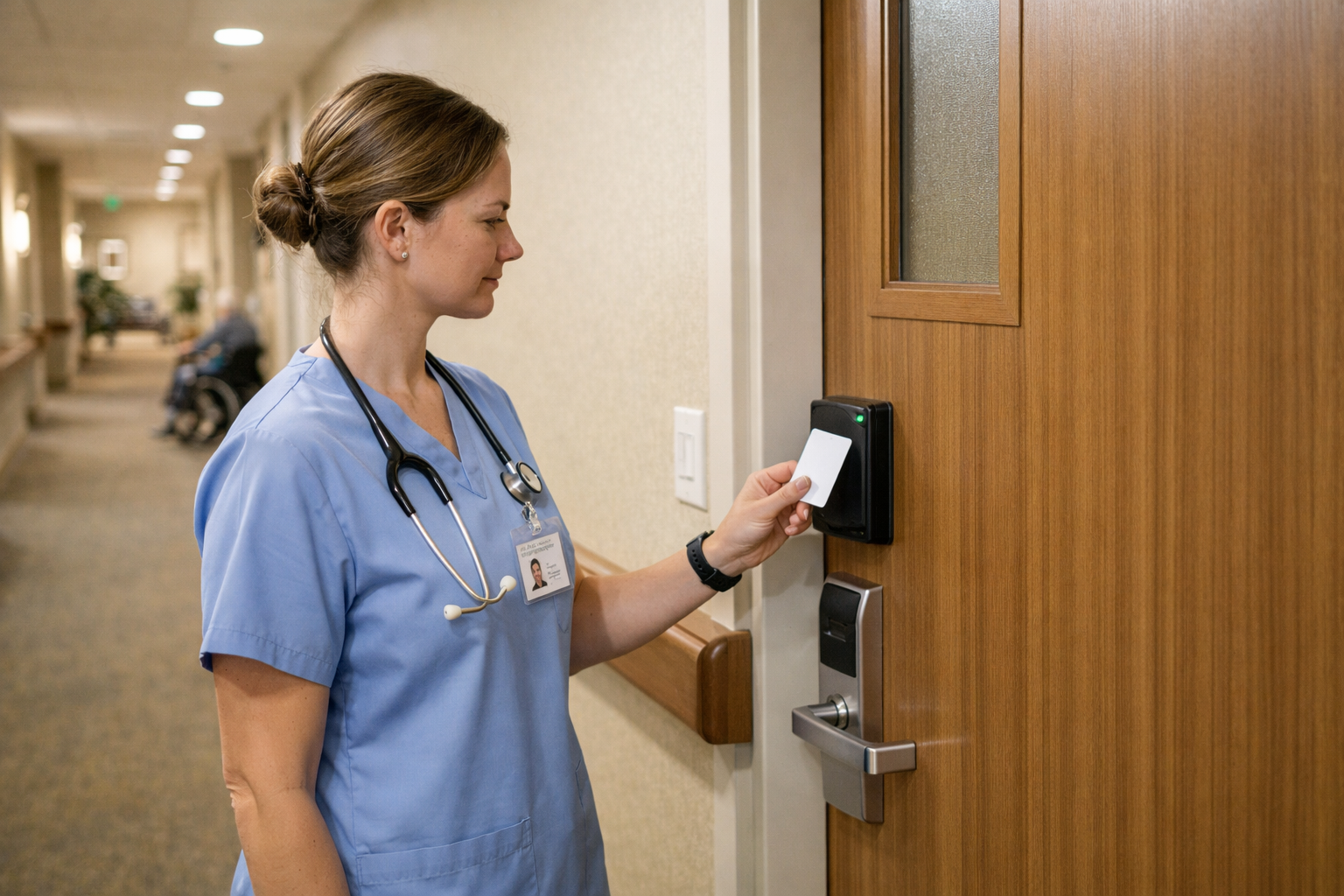
- Staff access to restricted areas
- Visitors, vendors, and deliveries
- Emergency response situations
This is where structured access control becomes essential—not optional.
Visit our Security and Access Solutions for Long-Term Care page to learn more about how these systems fit into a complete strategy.
Controlled Doors: A Regulatory and Practical Requirement
Across Canada, long-term care homes are expected to have controlled access at entrances and exits, especially where residents may be at risk of wandering.
But “controlled” doesn’t mean “locked down.”
It means:
- Doors can restrict access when needed
- Staff can override instantly
- Movement is monitored, not prevented entirely
- Systems adapt to different times, roles, and situations
A well-designed system allows:
Secure Zones: Not All Doors Should Be Equal
One of the biggest misconceptions in LTC security is treating all doors the same.
Modern systems divide facilities into intelligent zones, such as:
- Resident living areas
- Medication rooms
- Staff-only corridors
- Mechanical or service rooms
- Controlled exits
With solutions like OMNIA Access Control, facilities can:
- Assign permissions based on staff roles
- Create time-based access rules
- Track movement with audit trails
- Trigger automated responses (alerts, door unlocks, etc.)
This ensures staff have access where needed, residents remain protected without unnecessary restrictions, and overall risk is reduced without creating an environment that feels locked or institutional.
Supporting Resident Freedom Through Smart Design
The goal is not restriction—it’s safe independence.
Access control supports this by:
- Allowing residents to move freely within safe areas
- Preventing unsupervised exits in high-risk cases
- Enabling staff to intervene quickly when needed
For example when a resident approaches a controlled exit, the system automatically logs the event and can trigger an alert. Staff are notified in real time, allowing them to respond immediately and manage the situation proactively rather than reactively.
When integrated with video surveillance systems like CathexisVision, staff can:
- Respond faster with better context
- Visually verify events immediately
- Reduce false alarms
The Role of Intercom and Entry Systems
Front entrances in LTC facilities are critical control points.
Modern intercom solutions, such as Akuvox smart intercom systems, add another layer of intelligence:
- Video verification of visitors
- Mobile-based access for staff
- Remote unlock capabilities
- Integration with access control platforms
This allows facilities to:
- Reduce reliance on manual supervision
- Maintain secure perimeters
- Improve visitor experience
Integration: Where Access Control Becomes Powerful
Individually, each system provides value.
Together, they transform operations.
An integrated LTC security environment combines:
- Access control (OMNIA)
- Video surveillance (CathexisVision VMS)
- Intercom systems (Akuvox)
This enables:
- Event-driven automation (door + video + alerts)
- Centralized monitoring
- Faster response times
- Better reporting and compliance tracking
Instead of isolated systems, facilities gain a connected security ecosystem.
Applied Use
In a typical real-world scenario, a secured exit door is accessed outside normal hours. With an integrated system in place, the door event is automatically logged in OMNIA, while CathexisVision instantly displays nearby camera footage. At the same time, staff receive a real-time alert, enabling an immediate and informed response. Without this level of integration, the same situation would rely on manual monitoring, likely result in delayed response, and ultimately increase overall risk.
Staff Efficiency and Operational Impact
Access control doesn’t just improve safety—it improves workflows.
Benefits include:
- Reduced need for manual door monitoring
- Faster incident response
- Clear audit trails for investigations
- Simplified credential management
This allows staff to focus on what matters most:
Designing the Right System for Long-Term Care
Every LTC facility is different. The right solution depends on:
- Facility size and layout
- Resident needs and risk levels
- Staffing structure
- Regulatory requirements
A well-designed system should be:
- Scalable
- Easy to manage
- Fully integrated
- Built for healthcare environments
Access control in long-term care is not about simply locking doors—it’s about creating safer, smarter environments where residents can live with dignity and confidence.
By combining intelligent access control, integrated video surveillance, and modern intercom systems, facilities can achieve what matters most: strong security without sacrificing resident freedom.
Share:
Frequently Asked Questions (FAQs)
Access control systems manage who can enter or exit specific areas within a care facility, improving safety while maintaining operational efficiency.
They help prevent wandering, protect vulnerable residents, and ensure only authorized individuals access sensitive areas.
Video systems like CathexisVision provide visual verification of events, helping staff respond faster and more accurately.
Intercoms like Akuvox allow secure visitor management, remote access, and improved communication at entry points.