Integrated Security Systems: Why Connected Security Is Replacing Standalone Devices
For years, physical security systems were often planned as separate tools.
Access control managed doors. Video surveillance recorded activity. Visitor logs tracked guests. Intercoms handled entry communication. Reports were usually reviewed only after an incident had already happened.
That approach made sense when facilities were smaller, systems were less connected, and security needs were more straightforward.
Today, that has changed.
Organizations now manage more people, more doors, more sites, more credentials, more data, and more operational risk. Schools, healthcare facilities, manufacturing sites, government buildings, commercial offices, and multi-site properties can no longer afford to treat each security tool as a separate system.
Modern physical security depends on connection.
When access control, video surveillance, visitor management, intercoms, and reporting work together, organizations gain better visibility, stronger accountability, and a more flexible foundation for long-term security planning.
What Is an Integrated Physical Security System?
An integrated physical security system connects multiple security technologies so they can work together instead of operating in isolation.
This may include:
- Access control systems
- Video surveillance and video management software
- Visitor management platforms
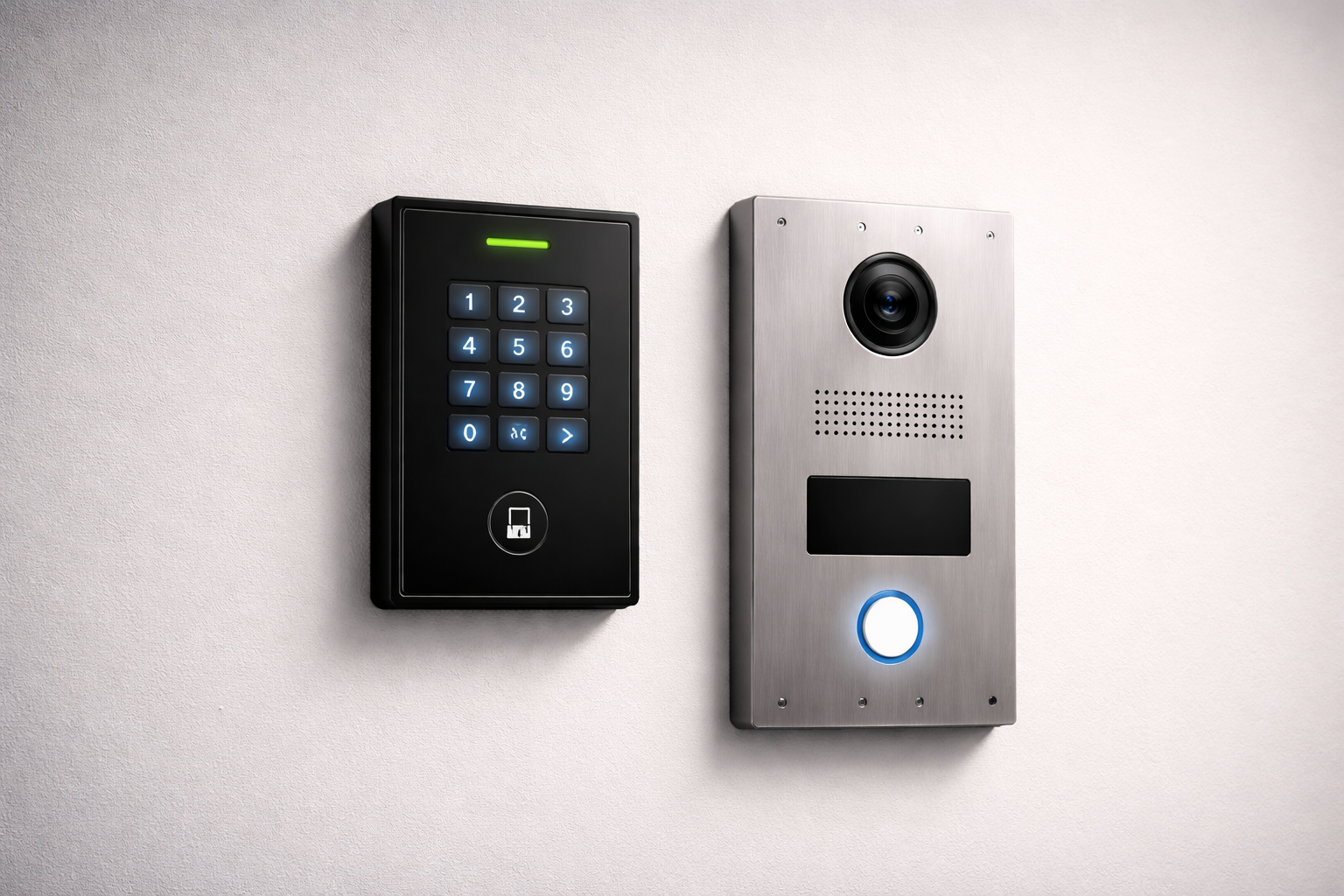
- Smart intercom systems
- Mobile credentials
- Biometric readers
- Door hardware
- Alarm events
- Reporting dashboards
- Cloud or on-premise management tools
- Remote technical support and maintenance workflows
The goal is not simply to add more technology.
The goal is to make security activity easier to understand, manage, and act on.
For example, a door event becomes more useful when it can be connected to video. A visitor record becomes more valuable when it connects to access permissions. An intercom call becomes stronger when it supports a structured visitor check-in process. A report becomes more powerful when it can show patterns across doors, users, times, and locations.
This is where physical security moves from device management to operational intelligence. into larger operational disruptions.
Why Standalone Security Systems Create Problems
Standalone security systems can work well for a single function, but they often create challenges as organizations grow.
A camera may record footage, but if it is not connected to access events, staff may spend extra time searching for the right clip.
A door may unlock properly, but if reporting is limited, it may be harder to understand who entered, when they entered, and whether the event was part of a larger pattern.
A visitor may sign in at the front desk, but if that information is not connected to access control, badges, host approvals, or exit records, accountability can be incomplete.
An intercom may allow someone to speak with a visitor, but if it is not part of a wider entry process, the organization may still have gaps between communication, verification, and access.
These gaps matter because security incidents are rarely limited to one device.
A real incident may involve a person, a door, a credential, a camera view, a visitor record, a time stamp, and a response action.
If those pieces are disconnected, the investigation becomes slower and less reliable.
Access Control Is Now a Source of Security Intelligence
Access control is often seen as a door decision.
Allowed or denied.
Locked or unlocked.
Granted or refused.
But modern access control provides much more than entry control.
Platforms such as OMNIA help organizations manage doors, users, credentials, permissions, schedules, reporting, and security workflows across different types of facilities. A modular access control platform also gives organizations room to grow as doors are added, secure areas shift, integrations change, or facility needs expand.
This is important because access control data can help answer questions such as:
- Who entered the building?
- Which door was used?
- What time did the event happen?
- Was access granted or denied?
- Was the attempt outside normal hours?
- Was the same credential used repeatedly?
- Can the record be reviewed or exported?
- Does the activity suggest a pattern?
When access control is properly planned, it does more than control doors. It creates a record of movement and activity that can support investigations, compliance reviews, staffing decisions, safety planning, and operational improvements.
Video Surveillance Is Moving From Recording to Awareness
Video surveillance has also changed.
For years, many organizations used cameras mainly as evidence tools. An incident happened, and footage was reviewed afterward.
That still matters, but it is no longer enough.
Modern video management systems can support live monitoring, event-based recording, analytics, notifications, and faster incident review. When video is connected to access control or visitor management, the value increases.
Instead of asking staff to search through hours of footage, an integrated system can help them focus on the event that matters.
For example:
- A door forced open event can be paired with video.
- A denied access attempt can be reviewed visually.
- A visitor entry can be connected to a camera view.
- A suspicious after-hours access event can trigger a response.
- A vehicle or perimeter event can be investigated with better context.
This does not replace human judgment.
It gives security teams better information so they can respond with more confidence.
Visitor Management Is No Longer Just a Sign-In Process
Visitor management has become a major part of physical security planning.
A paper sign-in sheet may record a name, but it often does not provide strong verification, real-time visibility, reporting, or consistent process control.
Modern visitor management platforms such as EVTrack help organizations manage guest and staff entry using tools such as ID scanning, QR codes, facial recognition, kiosks, mobile guard check-in, dashboards, analytics, and reporting.
This matters because visitors, contractors, vendors, parents, delivery personnel, temporary workers, and service providers all create movement through a facility.
A strong visitor management process can help answer:
- Who is on-site?
- Why are they visiting?
- Who is their host?
- Has their identity been verified?
- Was a badge issued?
- Was access time-bound?
- Did the visitor check out?
- Can the visit be reviewed later?
Visitor management should not be treated as a reception task only.
It is part of the security system. reliability across multiple facilities.
Smart Intercoms Support Better Entry Decisions
Smart intercom systems are another important part of integrated physical security.
At many facilities, the first security decision happens before a person enters the building. Staff need to see, speak with, and verify the person requesting access.
A smart intercom can support that process by allowing communication at entrances, gates, vestibules, loading areas, or secondary doors.
But the intercom should not work alone.
It becomes more valuable when it supports a larger workflow involving video verification, access control, visitor registration, and audit records.
For example, a school office may use an intercom to speak with a visitor before granting access to a vestibule. From there, the visitor can be checked in through a visitor management system, issued a badge, and recorded in the system. This creates a stronger process than simply unlocking a door.
The same idea applies to healthcare facilities, commercial buildings, government sites, residential communities, and industrial properties.
Communication is important.
Verified, recorded, and controlled entry is stronger.
The Role of Reporting and Monitoring
One of the most important benefits of integration is better reporting.
Security teams need more than activity.
They need understandable activity.
Good reporting helps turn individual events into usable information. It can support:
- Incident review
- Compliance documentation
- Internal investigations
- Visitor audits
- Access pattern analysis
- Credential management
- Staffing and operational decisions
- Maintenance planning
- Multi-site visibility
A report can show more than whether a door opened. It can help reveal unusual activity, repeated access attempts, after-hours movement, door usage patterns, visitor trends, or areas that may need a stronger security process.
This is why reporting should be discussed early in a security project.
The question is not only “What hardware do we need?”
The better question is “What information will we need later?”
Security Systems Must Be Designed for Change
Facilities rarely stay the same.
Teams expand.
Tenants move.
Secure zones shift.
Doors are added.
Budgets change.
Compliance expectations grow.
New integrations become necessary.
Technology standards evolve.
A rigid system can turn every change into a larger project than it needs to be.
A scalable, modular, integrated security system helps organizations adapt over time. This is especially important for multi-building environments, schools, healthcare facilities, manufacturing sites, commercial properties, government facilities, and organizations planning phased upgrades.
The strongest physical security systems are not only built for current needs.
They are designed to support future needs.
Why Integration Also Requires Better Security Practices
Integration creates value, but it also creates responsibility.
When access control, video, visitor management, intercoms, mobile credentials, and reporting tools are connected, more information moves through the security environment.
That information may include names, credentials, visitor records, access activity, camera footage, entry permissions, and system events.
Organizations should consider:
- Who can manage users and permissions?
- How are credentials issued and removed?
- Are inactive users reviewed?
- Are visitor records protected?
- Are access logs reviewed?
- Are devices and software maintained?
- Are firmware and system updates planned?
- Are reports available to the right people only?
- Are integrations documented and supported?
Physical security is now closely connected to data security, privacy, and operational resilience.
That means maintenance, support, permissions, and review processes matter just as much as the devices themselves.
Building a Better Physical Security Strategy
A strong physical security strategy should begin with practical questions.
Who needs access?
Where do they need access?
When should access be allowed?
How are visitors verified?
Where is video needed for context?
Which doors need stronger control?
What activity should trigger alerts?
How will events be reviewed?
How will the system scale?
Who will support it after installation?
Answering these questions helps organizations avoid disconnected technology and build systems around real workflows.
The best systems do not simply add hardware.
They create clearer decisions.
PMT Security’s Product Ecosystem
PMT Security supports integrated physical security solutions across access control, video surveillance, visitor management, smart intercom systems, live guard video monitoring, cloud-managed networking, and related security infrastructure.
Products and partner solutions such as OMNIA access control, Cathexis video management, EVTrack visitor management, Akuvox smart intercoms, mobile credential options, biometric integrations, and remote support services can work together to help organizations improve visibility, control, reporting, and response.
For integrators and facility teams, this connected approach helps reduce gaps between systems and creates a more practical foundation for long-term security planning.
Security Is Stronger When Systems Work Together
Physical security is no longer just about installing devices.
It is about connecting decisions.
A door event needs context.
A camera needs purpose.
A visitor record needs accountability.
An intercom call needs a process.
A report needs useful data.
A security system needs support after installation.
Integrated physical security systems help organizations move from isolated activity to clearer visibility and stronger control.
That is the future of physical security: not more disconnected tools, but better-connected systems designed around people, places, events, and response.
Share:
Frequently Asked Questions (FAQs)
An integrated physical security system connects technologies such as access control, video surveillance, visitor management, intercoms, credentials, alarms, and reporting tools so they work together as one security environment.
Access control helps organizations manage who can enter a building or restricted area, when they can enter, and what activity is recorded for later review. It supports safety, accountability, reporting, and investigations.
Video surveillance provides visual context for access events. When connected with access control, security teams can review door activity, denied access attempts, forced door events, visitor entries, and other incidents more efficiently.
Visitor management helps organizations verify, record, track, and manage guests, contractors, vendors, and temporary users. It improves accountability by creating a more structured entry process than a paper sign-in sheet.
Organizations should consider scalability, reporting, integrations, credential management, visitor workflows, video coverage, intercom needs, system maintenance, cybersecurity, and long-term support.