How Remote Technical Support Helps Multi-Site Organizations Stay Operational
Managing physical security across multiple locations introduces operational challenges that many organizations underestimate.
As businesses, educational institutions, healthcare facilities, manufacturers, and commercial property operators expand across multiple sites, maintaining reliable and consistent security operations becomes increasingly difficult. Access control systems, video surveillance platforms, intercoms, visitor management software, and network-connected infrastructure must all continue operating reliably — often across geographically separated facilities.
Remote technical support has become one of the most effective ways organizations maintain uptime, reduce disruptions, and improve operational consistency across distributed security environments.
At PMT Security, PMTCare provides remote technical support services designed to help organizations manage integrated physical security systems more efficiently while reducing pressure on internal teams.
Why Multi-Site Security Environments Are More Complex
Multi-site deployments often combine multiple technologies and generations of hardware. A single organization may operate:
- Access control systems
- Video management software
- Intelligent intercom systems
- Visitor management platforms
- Cloud-connected services
- Remote networking equipment
- Mobile credential solutions
As deployments grow, organizations frequently encounter operational inconsistencies between locations. Older firmware versions, unsupported hardware, network instability, and configuration differences can create reliability issues that are difficult to identify without centralized oversight.
Common challenges include:
- Delayed firmware updates
- Credential synchronization problems
- Inconsistent camera retention settings
- Limited visibility into system health
- Local IT resource limitations
- Communication interruptions between devices
- Integration failures between platforms
Without structured support processes, even minor technical issues can escalate into larger operational disruptions.
Faster Troubleshooting Without Waiting for On-Site Service
One of the largest advantages of remote technical support is faster response time.
Many physical security issues can now be diagnosed and resolved remotely, including:
- Credential and cardholder issues
- Software configuration errors
- Database synchronization problems
- Camera communication failures
- Recording configuration adjustments
- User permission changes
- Firmware verification
- Event log analysis
Instead of waiting for an on-site service visit, support teams can often identify issues immediately using secure remote access tools. For organizations operating 24/7 environments, reducing troubleshooting delays can significantly minimize downtime and operational impact.
Remote diagnostics also allow organizations to prioritize which issues truly require dispatching technicians onsite, helping reduce unnecessary service costs.
Cybersecurity Has Become Part of Physical Security
Modern physical security systems increasingly rely on IP-based infrastructure, cloud services, and interconnected devices.
Organizations such as the Cybersecurity and Infrastructure Security Agency and the Security Industry Association continue emphasizing the importance of cybersecurity best practices for physical security infrastructure. These include:
- Software patch management
- Firmware maintenance
- Password security
- Secure remote connectivity
- Network segmentation
- Backup verification
- Unsupported device identification
Remote support services now play an important role in helping organizations maintain secure and supported environments.
As physical security systems become more integrated with corporate IT infrastructure, ongoing technical oversight is becoming increasingly important for operational continuity and risk reduction.ental wear and degradation before hardware failures impact operations.
Supporting Educational and Campus Environments
Educational institutions often operate large distributed environments with highly dynamic schedules and security requirements.
Security systems within schools and campuses may support:
- Controlled entry points
- Visitor management
- Emergency lockdown procedures
- After-hours scheduling
- Surveillance investigations
- Parking and perimeter monitoring
Remote support allows technical teams to quickly adjust schedules, permissions, and configurations across multiple campuses while minimizing disruption to students, staff, and daily operations.
Seasonal scheduling updates, holiday access changes, and temporary credential management can often be completed remotely without requiring on-site intervention. across these integrations while improving long-term operational continuity.
Better Operational Visibility Across Multiple Sites
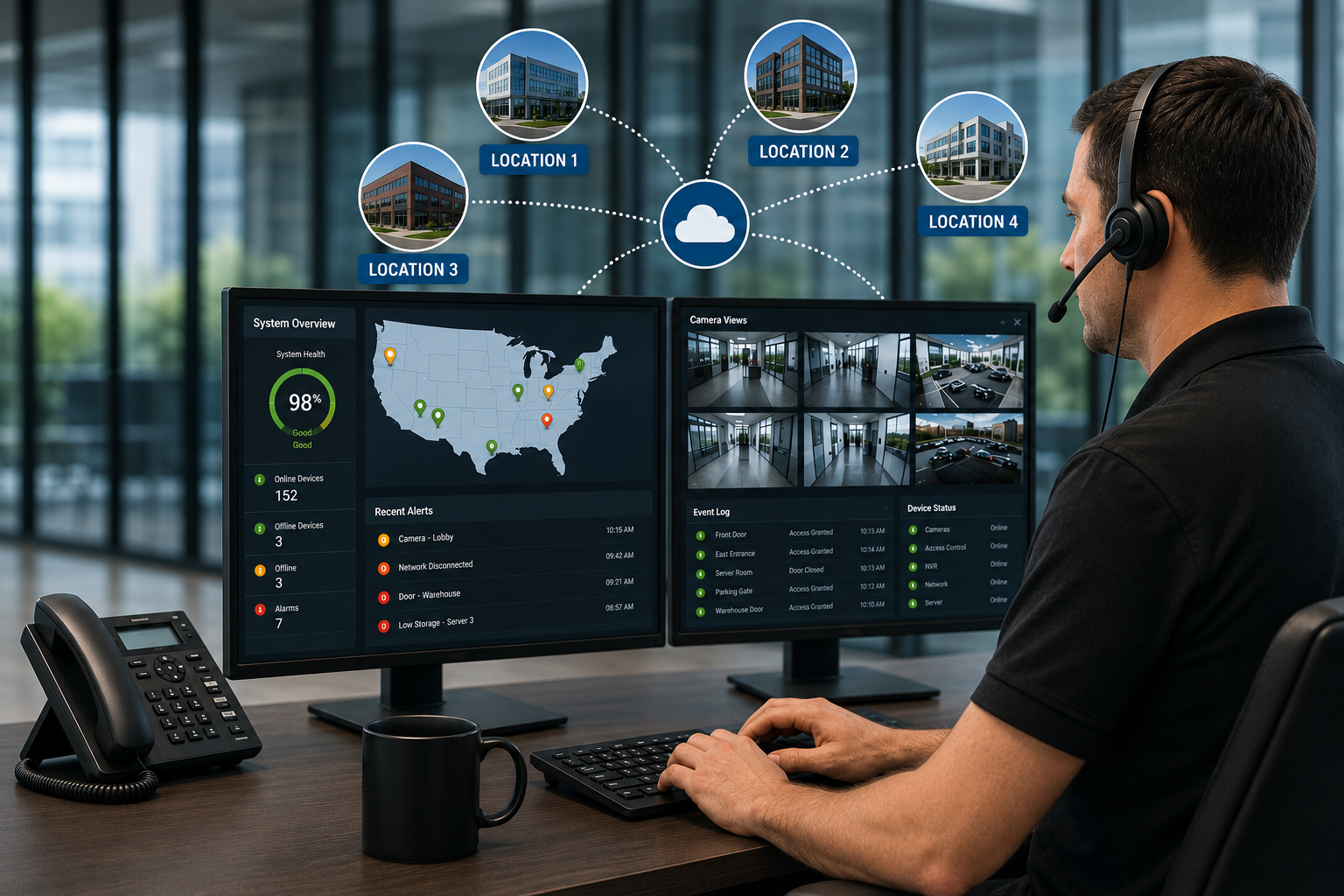
Remote monitoring provides organizations with improved visibility into the health of their security infrastructure.
Rather than waiting for failures to occur, support teams can proactively identify:
- Offline devices
- Storage warnings
- Recording gaps
- Integration failures
- Database performance concerns
- Firmware inconsistencies
- Communication interruptions
This proactive visibility helps organizations make better decisions regarding:
- Upgrade planning
- Lifecycle management
- Budget forecasting
- System standardization
- Infrastructure expansion
Organizations with centralized operational visibility are often better positioned to maintain long-term system reliability across multiple facilities.
Reducing Pressure on Internal IT Teams
Internal IT departments are already responsible for maintaining a wide range of business-critical systems.
Physical security environments introduce additional complexity through:
- Specialized hardware
- Manufacturer-specific configurations
- Integration dependencies
- Compliance considerations
- Real-time operational expectations
Remote technical support services help reduce workload on internal teams while providing access to specialized expertise related specifically to physical security infrastructure.
This becomes especially valuable for organizations managing multiple vendors, legacy hardware, or rapidly growing deployments.ce.
As organizations continue expanding across multiple locations, remote technical support is becoming an essential operational strategy rather than simply a convenience.
Faster troubleshooting, proactive monitoring, cybersecurity support, and centralized operational visibility all contribute to improved reliability and reduced downtime across distributed security environments.
PMTCare helps organizations maintain stable and consistent physical security operations through remote diagnostics, lifecycle planning, technical support, and ongoing system maintenance.
Share:
Frequently Asked Questions (FAQs)
Remote technical support allows security professionals to diagnose, troubleshoot, configure, and maintain physical security systems without requiring an on-site visit.
Many modern systems can be remotely supported, including access control systems, video management software, intercoms, visitor management platforms, and cloud-connected security infrastructure.
Remote support reduces delays by allowing technicians to quickly diagnose and resolve issues remotely, minimizing downtime and operational disruption.
When properly configured using secure remote access practices, encrypted connections, and cybersecurity best practices, remote support can be safely integrated into physical security environments.
Multi-site organizations often manage complex deployments across different facilities. Remote support helps maintain consistency, improve visibility, and reduce the operational burden on local IT teams.
Yes. Remote support teams often assist with firmware updates, software patch verification, backup monitoring, password management guidance, and identifying unsupported devices.
Contact Us
PMT Security Inc. is here to help, contact us directly by phone,